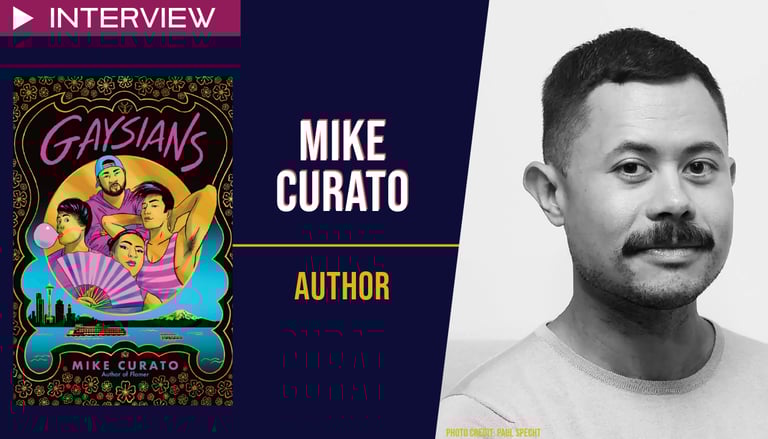
Mike Curato Talks Queer Asian Identity in Gaysians
An interview with Mike Curato about Gaysians: a graphic novel on friendship, chosen family, and being queer and Asian in early‑2000s Seattle.
INTERVIEWSMIKE CURATOBOOKSGAYSIANS
Big Gay Energy
1/5/202613 min read
Q and A
How would you describe Gaysians to somebody who hasn't read it?
It's a story of friendship and chosen family. It's a story about four friends living in Seattle in the early aughts. And they're kind of supporting each other or not supporting each other through the trials and tribulations of living with this identity of being queer and Asian.
What inspired you to write this novel?
So there is a character in the book named AJ. And he and I have very similar early adulthood life trajectories, one could say. We have very parallel lives. So I came out my senior year of college and I moved to Seattle. And it was 2003. And when I got there, I made my first really close gay friends who also happened to be Asian. They really took me under their wing and kind of showed me the ropes. Those friends really inspired this story because I had never had friends who could like see and understand me in this very three-dimensional way before. I had a lot of very supportive friends when I came out, but they were almost all straight and most of them were white. This was just very different. I mean, we were different people, but had similar life experiences. So the book is kind of, I mean, it's dedicated to those friends. It's an homage to that time. But it's also, as I said, like a story about chosen family that I think has a pretty universal message, even though it's very niche story.
How did you balance the book's ode to chosen family with the complexities of blood relatives?
Yeah, I think all queer people kind of understand and maybe yearn for chosen family, whether or not your bio family is accepting of who you are. Yeah, so I was really leaning into exploring, you know, what that means. And I try to show like an array of different experiences of like the queer characters and their bio families. Some of them are accepting. Some of them are not. Some of them have disowned. Some of them are kind of like the jury's still out, you know. So I think, yeah, I was trying to show that spectrum. And whatever each character's situation is, they really need each other anyway.
The book looks stunning. How did you decide on the limited palette of blues, magenta, and grays?
Yeah, well, I'm a big fan of a limited palette. I think you can do some really cool things with it, right? So the book I made before this graphic novel before this was Flamer and it was all black and white with spots of red and oranges. So I kind of already had this, I guess, schtick going, but it worked. And I was like, yeah, I think I want to do that with Gaysians.
So the first color I chose was blue as a sort of like foundational color for most of the book. When I think of Seattle, I think of clouds and of course, like cloudy Seattle, you think gray. But also I kind of feel this sort of like very cool blue glow that the city takes on. I lived there for like 10 years. I just wanted like a little bit more color injected into it than just relying on gray. So that's why I went with blue. And then I used a magenta because gay. It was fun to be able to have have that contrast.
Mostly it's, lots of blues with like pops of pink, but sometimes we see that reverse. But I like to play around with the color to sort of evoke different emotions. Maybe I'll have a pop of color to show the importance of something to the reader, like, oh, this object might carry some weight to it. Then there are black and white scenes. Those are all flashbacks. So that's purely to denote we're going back in time. And sometimes I'll have a pop of color in those as well. And that's really jiving home, Okay, this you need to pay attention to. And some black and white scenes are just black and white.
Then towards the very end of the book, there's another cover, just the sort of golden color introduced. That's to sort of separate it from the rest of the book. First, we have a scene in a different place. And I really wanted to show like, oh, geographically, we are not in Seattle. It's not blue here. Set in California, so we need a little warmth. And then there's a party with a certain theme that I think you just really need gold for it to make sense. And also another exception is there's a scene set at Pride. And I'm like, you just can't really do Pride without Rainbows. I tried doing different gradations of blues and pinks. I'm like, this just looks like making up new queer flags. It's like, what is this? This is not quite the trans flag. Like, what are we looking at? It's not quite bi. I'm like, okay, we're just going to do rainbows. I think it's okay to break the rule for the pride when it makes sense.
You emphasize that Asian Americans are not a monolith. How did that shape Gaysians?
Yeah, I think that I've had so many experiences and that I've talked about with friends over the years, that's just like, oh my God, like we really all go through this. I mean, we know why, but it's like, oh my gosh, this is something we experience all the time and not something that I've really seen documented. I'm sure someone has somewhere, but like I wasn't seeing it. And so part of the impetus for making the book also was as a sort of documentation of experience. It's validating to record things and have other people confirm like, yes, you're not crazy. Because there are times when I would share different experiences with people and get like completely gaslit. Like, no, I don't think that's a thing. And it's like, it is a thing. I think it's Tony Morrison that said you have to write the books that you want to read, right? If it doesn't exist, you have to write it. I'm paraphrasing, but I will do whatever Tony Morrison tells me to do.
How did the interviews you did with other Asian queer people impact the book?
Oh my gosh, they were critical. I started out writing about my own experience and then talking with my friends and their experiences and like thinking about conversations we've had in the past. But then I started talking to complete strangers also, and they just really offered a lot of perspective. So while we do have this common experience, I'm also writing outside of my own experience when I'm creating characters of different ethnicities and my own and different life experiences, different gender expressions.
So listening to their stories really informed how these characters really fleshed out. And they feel very real to me. They've become friends to me. And like I'll often think about them like, oh, I wonder what K is up to today or, you know, like what's John doing? The people who I interviewed were just very generous and there were things that went into the book that I hadn't thought of before until I spoke with them. And I would say, aside from AJ, each character is very much an amalgamation of different people who I spoke with.
Which character did you connect with the most, and which was the most fun to develop?
I mean, they're all fun to develop. I mean, my favorite is kind of K because she's just a baddie, you know, like she... She's so witty, like a cutting humor, right? Very dry. She's a very strong person. She's someone who I kind of aspire to be. And then Stephen, also very fun to work on because he's like the good time girl, right? He wants to have fun. He has no filter. He just doesn't give, you know, a flying flag about whatever. And that's kind of fun to just sort of like let my hair down with that character.
And John, I don't know. John's sort of like a rock. And I feel very safe with John when I'm writing for him. AJ was maybe the most annoying one to write for me because he's basically me, right? And I'm like, oh, he's younger me. And so I'm like, oh my God, you know, you're so annoying. Like, get it together, you know, and just kind of calling upon mistakes and awkward situations from the past that I would, I think if presented with today, might handle differently.
And then some of the supporting characters too, like are hilarious to me. Like Hassan is this sort of like bitchy queen who everyone's like, oh my God. And we all know him, right. So he's fun. He's fun to write for and I made sure to have fun with every character I developed because if I'm not having fun developing them, then they're probably not going to be very engaging characters, right?
We noticed the dynamic feels like a tight chosen family. Was that always the plan?
Okay, so originally the first draft, there were six main characters. So the supporting characters were also main characters. And my agent was like, this is too long. It was such a long book and she's like, you need to cut it down to like, just some of the characters. So I kind of went with this four-person archetype system that you might find on shows like The Golden Girls or Sex and the City. You've got Mommy, Daddy, Clown, and Good Time Girl. And those are basically my characters, right? Like K is mom, John is dad, AJ is the clown, and Stephen is the Good Time Girl. It's just a dynamic that seems to work. And it just, the bantering was always great. It leads to many, like, entertaining situations on its own when you got those collection of characters together.
Which scene was your favorite to write or illustrate?
I mean, there were a bunch that I really enjoyed. I think one of the funniest ones to me that I was laughing while I was writing it and illustrating it was... so AJ goes on a lot of bad dates as did I in my 20s but there's this one date where he goes to this Sichuan restaurant with this guy and it's not going very well and the date leaves the table and then AJ can hear his name being called through this like bamboo next to him and he parts the bamboo. And there are his friends on the other side like, oh, hi, what's going on? And yeah, it's kind of like inspired by true events. It didn't go exactly like that, but yeah, that was a date. Like I was having a bad date and there were people I knew on the other side of this bush next to me. And they were talking to me through it. Like when he went to the bathroom and I was like, oh my God, help me.
Were there scenes that were emotional for you to make?
There were so many K scenes that get me so emotional. Like when K is little and she has a grandmother who sees her, like sees who she is. And then there's another scene later that's connected to it. I don't want to spoil it, but like, oh my God, I wept when I was writing this. I was like, I hope this pops up and it did. There's another scene, well, everyone ends up having beef with each other at some point, but there's this sort of reconciliation scene with the very specific thing that happens. And that was an idea that came out of an interview that I did. And that's another one, I was crying when I wrote it, crying when I drew it. Yeah, that was an emotional two pages or three pages.
K says Shikata ga nai, meaning it cannot be helped. Where did that come from?
Yeah, it's from a book called A Farewell to Manzanar, which is a first-person account of the Japanese internment. It's something that I think a grandmother in that book would say. And that stuck with me when I read that in high school or college and that's stuck with me for many years. Yeah, it's such a poignant phrase. It's just like, yep, it is what it is, right? It cannot be helped. So that is the phrase that we hear a few times in the book. Because I just think it like encapsulates so much of what all those characters go through. But obviously, it's quite relevant for K.
Gaysians shows how queer spaces can be white-centric. How should media change?
Well, I think we just need to hear from more people who we don't hear from very often. There are certain stories that we hear all the time, perspectives that we hear all the time. And those are valid, like very valid experiences. But when we only get a slim percentage of lived experience, that's when an imbalance of power occurs. So I want to hear from more people. And obviously, like I say this in the afterward, like, I can't represent all of gay Asian people either, like, in one book. Like, that's impossible and silly to try to set out to do. So I hope my book inspires more queer Asian people to tell their stories, queer people in general to tell their stories, because there are so many rich histories that we just haven't really heard much from. And even within queer storytelling, I mean, that's been very white-centric as well. It's just time to hear from all the voices. We need to hear more trans stories. We need to hear more asexual stories. I mean, I can go on and on, right? It's like not every gay story or trans story needs to like necessarily focus on coming out or like transitioning or those things. We need all the perspectives and all the types of stories.
Flamer has been challenged and banned in some places. How did that feel and did it change you?
I was part of the first list of titles that were put under investigation in 2021. So Flamer came out in 2020. I didn't have any negative feedback at all. It was all like frosting. You know, it was all good news. And then over a year later, a Texas lawmaker came out with this McCarthy-esque era list of over 800 titles. And he was like, these books are in our children's schools and they need to be investigated. And I felt sick. Like I felt literally sick to my stomach, hearing that news and watching a handful of angry vocal parents screaming about my book. Watching someone hold my book in their hand and sort of defaming it was intense.
The names that I was called are like my worst nightmare, right? Especially like a queer person in children's literature being called a pedophile or a groomer. It's just like, okay, you cannot say something worse to me. So it was pretty harrowing. And I mean, it continues to be hurtful, but I've gotten so much support. And I've maybe gotten a thicker skin also over these past few years and drawn certain boundaries.
I mean, the thing that's really upsetting is that this is a book that I created to try to help people. So we hear about how Flamer is sexually explicit. It's not. We hear about, I don't know, all this misinformation, but what they don't talk about is that Flamer is a book that I wrote to try to persuade kids not to kill themselves for being gay. I mean, that's what the book is. And it's a book about teenagers for teenagers. It's just an honest story about teenage life. And there are things in there that people don't like, but it's real. And I stand by it all because I lived through all that.
So what's so hurtful to me is that there are kids out there going through exactly what I went through when I was 14. And it's still 1995 in a lot of parts of the US. And I just wanted to like send out some life rafts, you know, to be like, hey, you're okay. And I made it. You can make it. And it's just really wild how people are trying to pluck those little lifelines out of libraries but i've also seen a lot of community organizing.
I had really great news the other day Flamer was the first book banned in Harford County Maryland and that just got overturned just a few days ago. That was like a community of people like getting together and be like, no, no, we're drawing a line here. We just need to see more of that nationally. I know that there are people working so hard right now in districts where books are being banned left and right. So hopefully we see more of this, more protection of free speech, which obviously is critical in this current state of the union.
What do you hope readers will take away from Gaysians?
I think most important to me is I hope that queer Asian readers feel seen, you know, just feel seen and understood. And I was just saying how Flamer is the book I didn't have when I was a teenager, and Gaysians is the book that I needed when I was in my early 20s. I've heard from some people who don't have a community like the one in the book. And they're like, oh, this was important for me to see that and to sort of visualize that for myself.
It's a sort of call to action in a way. I think, again, especially now, we really need to be there for each other. And like, I just really want queer people to not lean into the fear, but like lean into each other. I think we're really resilient people. Maybe I don't have, I mean, this kind of goes hand in hand with the idea of chosen family is like, maybe I don't have a bloodline of queer ancestors, but like I feel my queer ancestors.
I think about the people who have struggled before us and they have lived very full and vibrant lives despite the prejudices that they endured when they were on this earth. And so I look to them for strength. I feel like this book is a way that I can like pass along that strength to other people. And hopefully it will still be around when I'm gone.
Final Notes from Us
Gaysians is a love letter to the kinds of friendships that change you, the small moments that stick with you, and the people who teach you how to be seen. Mike's approach to color, character, and the quiet labor of representing many different Asian experiences makes the book both intimate and expansive. His work reminds us how necessary it is to tell the stories we need and to hold space for others to tell theirs.
If you want more from us join our Patreon for exclusive content, ad free episodes, and full length reaction videos.
If you want to keep talking join our Discord to talk about queer media with other queer media lovers.
Until next time, hydrate for Lesbian Jesus and gay it up all over the place!
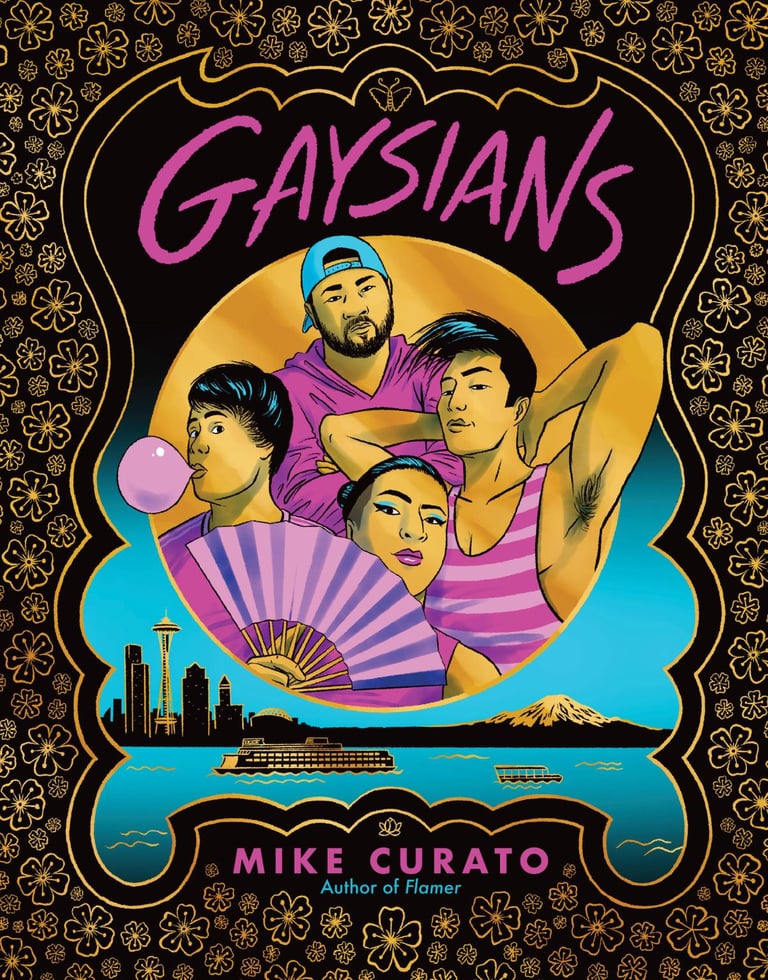
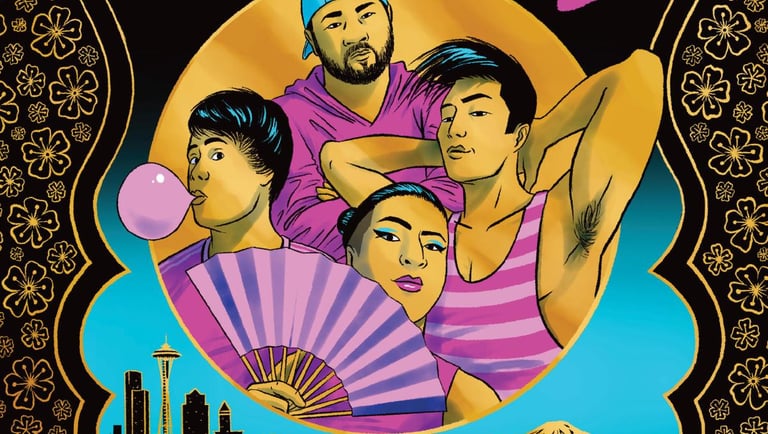
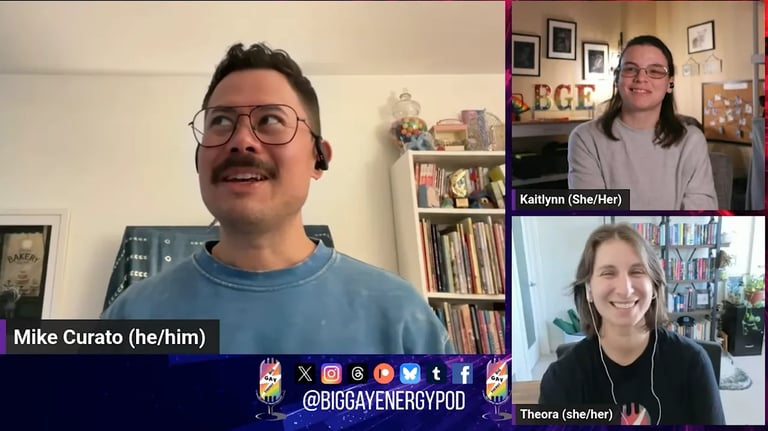
We sat down with Mike Curato to talk about Gaysians, his gorgeous new graphic novel about friendship, chosen family, and being queer and Asian in early 2000s Seattle.