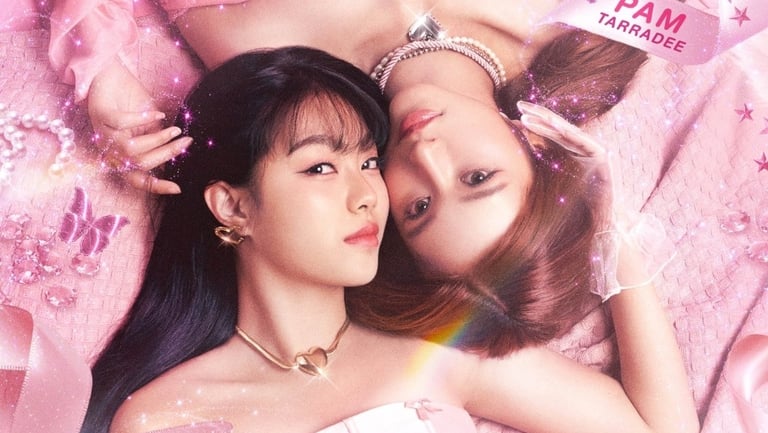
Behind the Scenes of “Queendom The Series”: An Interview with Screenwriters Pat and Kade
We sat down with Natcha Kongmhun (Pat) and Pattharawadee Srichai (Kade), the creative minds behind the scripts for “Queendom The Series.” In this candid interview, Pat and Kade share how they adapted the original novel, developed the show’s memorable characters, and navigated the challenges of writing a GL body swap story. They discuss their writing process, the importance of authentic representation, and how fan feedback shaped the series. Whether you’re a longtime fan or just discovering “Queendom,” this interview offers a thoughtful look at the teamwork and creativity behind one of Thai GL’s standout shows.
THAI GLTVINTERVIEWSQUEENDOM THE SERIES
Big Gay Energy
11/10/202514 min read
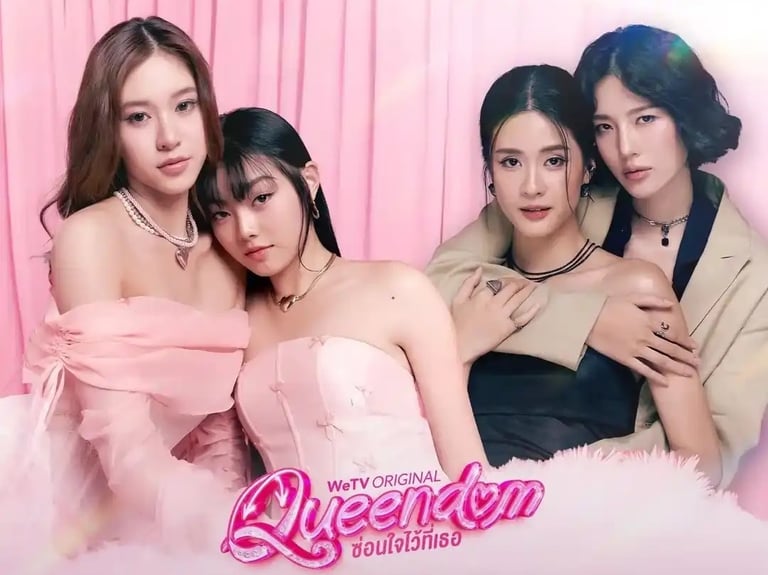
For fans of Thai GL dramas, "Queendom The Series" stands out for its heartfelt storytelling, unique body-swap twist, and vibrant cast of characters. We had the chance to sit down with the series’ screenwriters, Natcha Kongmhun (Pat) and Pattharawadee Srichai (Kade), to talk about their creative process, the challenges of adapting a beloved novel, and how they worked together to bring Print, Rey, and the rest of the Queendom crew to life. In this interview, Pat and Kade share candid insights into their writing partnership, the decisions behind key story changes, and what it really takes to keep both longtime fans and new viewers invested in the journey.
"Queendom The Series" follows the intertwined lives of Print and Rey, two young women who unexpectedly swap bodies and must navigate each other’s worlds. Adapted from a popular novel, the show blends romance, humor, and real-life challenges, exploring themes of identity, empathy, and self-acceptance. With its fresh take on the body-swap trope and a focus on queer women’s experiences, the series has quickly built a passionate fanbase both in Thailand and internationally.
How do you two work together as a writing team? What was your process for developing scripts for Queendom?
Pat: Actually, Queendom has been quite a long journey! I really have to thank everyone who’s been part of this project since day one — from the story development team who helped adapt and shape the plot and characters from the original novel, before handing it over to me, Kade, and Tan to continue developing the scenario and screenplay. Once we completed each draft, we’d sit down with P’Ned and P’Beam to gather their feedback and polish the script further, making sure the script became the strongest version it could be.
Kade: Our team of three writers works really well together and we’ve got a clear process down.
My main job is writing scenarios. This means designing the plot for each episode, mapping out what happens in every scene, and creating 'Dialogue Guides' for the big emotional moments. Those guides basically set the tone and show how the characters should be interacting.
Once the Scenario is locked, I pass it off to Tan, who takes it and turns it into the full Screenplay.
Then Pat, who is also on our script supervision team, jumps in. Pat pitches new ideas, reviews the first draft, and helps polish everything by adding in those important details or dialogue to really make the script perfect.
Was there a character whose voice came to you more easily than the others?
Pat: For me, it would probably be Print. She’s playful, cheerful, and full of positive energy. It’s always so much fun writing her because I get to sprinkle in lots of jokes and lighthearted lines. That makes her a bit easier to write compared to other characters who think one thing but say or act in a completely different way. But the most challenging characters to write were probably Wanmai and Duen. For Wanmai, she always speaks from logic rather than emotion, so her lines have to sound calm, sharp, and cool at all times. And for Duen, she truly loves and cares for Rey deeply, but her dialogue also carries subtle pressure within that love. Finding that balance made her lines especially difficult to write.
Kade: For me, the easiest was definitely Saifon, and right after her, Print. It’s probably because they’re both extroverts and their personalities are a lot like mine, so it was just easier to find and capture their voices.
The hardest, without a doubt, were Wanmai and Rey. Their characters are naturally quiet and think a lot before they say anything, which meant I had to think just as hard. There were times I’d get stuck on a scene for ages, genuinely struggling to figure out what Wanmai or Rey would actually say in that situation.
How closely did you follow the original novel? Were there any major changes you made for the series?
Pat: Since we were adapting the novel into a 12-episode series, of course we had to expand the storyline to make it fit. But what we really tried to keep at the heart of the adaptation were the characters and the key highlight scenes — the ones we knew readers of the novel would be most excited to see come to life, such as the “Biggie and Littie” moments, the 10-day anniversary, the rose bouquet scene, and of course, the Black Cat and Orange Cat dynamics.
Kade: We changed a lot. The biggest thing was when they swap back to their original bodies. In the novel, it just happens and is fixed by 'true love. It’s just like this 'test' from the universe to make them fall in love. And once they’re in love they swap back.
For the series, we wanted it to be messier! We added a whole new mysterious person and made the swap happen because both Rey and Print were miserable and desperate to escape their own lives.
(Print was completely burned out from working so hard to keep her family afloat, while Rey was suffocating under her mom's expectations. They were both looking at each other thinking the other person had the perfect life. So, for our version, they can only switch back when they finally understand each other’s struggles and truly want their own lives back.)
That new rule meant we had to change their backstories. Novel-Print had both parents but Series-Print's dad passed away, making her the family breadwinner with a new brother and sister (Frank & Patty) to make her home life feel really busy and chaotic, which is the total opposite of Rey, who’s a lonely only child.
Novel-Rey was just quiet and reserved because her family forces her to have this certain image but in the series our Rey is a 'girl in a bubble' whose mom controls everything.
And of course, we developed Saifon and Wanmai into a couple, which totally wasn't in the book. Same for Auer and Frank, that whole storyline is new, too.
We were definitely nervous about making so many changes, but we really tried to stay respectful to the original story.
How did you decide what parts of the novel to include and which to omit?
Pat: We also kept reading the novel fans’ feedback to see what they loved most, and tried our best to keep those elements — or adapt them to fit naturally with the scenes and storyline in our series. But sometimes we had to gently adapt or set aside certain parts from the original novel, just to make sure the story flowed smoothly in the series — but we always did it with full respect to the original work.
Kade: Honestly, we have to give a huge shout-out to the Story Development team.
They did the heavy lifting of interpreting the novel first, figuring out what to keep and what needed to adapt for the series. It made our job so much easier.
On top of that, the writing team, our director, producer, and the script supervisors—we were in constant discussion. We talked a lot about those key moments from the novel that we absolutely had to protect, or at least pay homage to in the script.
Even with all the big changes we made, people still felt the original 'vibe' of the novel. The fact that the audience genuinely picked up on that. We’re just so thrilled.
Did you get any feedback during development that made you rethink or adjust your approach?
Pat: Of course, after we released the pilot, we kept following the feedback closely. We took those comments and used them to further develop the series — especially for the mirror NC scene. We asked ourselves questions like, how can we make the audience feel that it’s not just one person doing something with themselves? or how can someone truly fall in love with their own body? That’s why we placed a lot of emphasis on character development. And yeah, as P’Ned always says, “Teamwork makes the dream work.” We really did have a dream team with every draft, we’d sit down with P’Ned and P’Beam, get their feedback, and keep refining it until it became the best version of the script.
Kade: When the pilot first dropped, we got so many comments about that 'weird feeling' people got from watching Rey and Print kiss their own bodies.
That feedback really sent us back to the drawing board. It showed us just how challenging it was going to be to sell them genuinely falling in love while they were literally wearing each other's faces. We had a lot of work to do.
Were you concerned about falling into clichés with the body swap or GL elements? How did you avoid that?
Pat: Frankly, I was really concerned about falling into clichés, but I believe that by adding new elements and fresh perspectives to the scenes, we could make them truly memorable. I always tell myself that every story has a confession or kiss scene, but come on, girl, challenge yourself! Find a way to make it stand out and feel different.
Kade: We always worry about clichés and want our series to be memorable on its own. But honestly, this show had a bit of a secret weapon: we were mixing the body-swap genre with GL. Just combining those two things already made it feel unique and stand out. And as for the actual body-swap clichés, we had a total blast. We didn't run away from them—we leaned right in and poked fun at them. It was so much fun to write!
Were there any social or cultural issues you wanted to highlight through the story?
Pat: I believe everyone probably caught the messages we wanted to share about self-love and empathy. For me, as a script team, it’s truly special to see those messages resonate with the audience. The body swap trope already naturally explores the idea of understanding and empathizing with someone else’s life, but what we wanted to add on top of that was a reminder that sometimes we get so caught up comparing ourselves to others that we forget to look back, appreciate, and love ourselves enough.
Kade: And beyond just self-love and empathy, a huge theme for us was Women empowerment. We show all these women, at different stages of life, facing that same societal pressure that forces us to compete with each other, or constantly prove ourselves. We really wanted to flip that. We took that conflict and deliberately turned it into them standing together and genuinely supporting one another. You see it happen with Print and Rey, and you even see it with Rey and her mom by the end.

What unique challenges did you face writing a GL body swap story?
Pat: The challenge with a GL body swap story is figuring out how to make the audience instantly recognize who’s who after the swap. In a typical body swap between a man and a woman, the contrast tends to be more obvious because of how gender roles are traditionally portrayed. So for us, we really had to keep in mind how different Print and Rey truly are, and make sure those contrasts still shine through even in the words they use and the way they express themselves, so the audience can immediately feel who’s who after the swap. It really made us focus more on the essence of the characters and their emotions, rather than any gender roles.
Kade: First, the characters had to be super clear. Because once they swap, the audience has to still see and believe that's (for example) Print's soul acting inside Rey's body.
But the real challenge was making them fall in love while they were swapped. That means they’re literally falling for someone who is in their own body! The relationship development in the script was everything. We had to figure out how to write it so the audience would believe it and not just cringe when they got romantic.
How did you keep both characters’ voices distinct and true to themselves after the body swap?
Pat: We spent a lot of time discussing and fine-tuning each character’s voice. We even created a dialogue bible that tracks how each character talks — their pronouns, tone, and unique way of speaking. Honestly, finding the right voice for each of them was probably the most challenging part of writing the screenplay.
Kade: That's the part that seems easy but is actually brutal! We talked so much and rewrote those early scripts constantly. We were trying to lock down their exact tone, the specific pronouns they used, just how they spoke.
Those first few episodes? The revisions were endless. It honestly felt like we hadn't properly 'met' the characters yet. Then, somewhere around Episode 4, it just clicked. We finally knew them, and everything started to flow.
Is there a scene that you rewrote the most, and what made it so tough to get right?
Pat: It’s hard to say which scene we revised the most, but I’d say the ones we reworked most often were probably in Episodes 1 to 2 — back when we were still trying to find each character’s true voice. It took many drafts before we finally found the one that really clicked.
Kade: For me, it's always the big, dramatic monologues/ dialogues. Those scenes are the real killers!
Like Rey’s award speech (Ep 11). It was the moment she finally unlocked that huge, lifelong conflict with her mom, the moment they truly understood each other, so it needed to hit the audience right in the feels.
Or the wedding scene (Ep 12), where Print and Rey’s speeches had to sum up their entire journey and show just how much they’d been through.
And don't even get me started on that 'audition tape' scene (Ep 11)! The one where Rey is directing Print. Print is just technically reading a script, but every single word is secretly meant for Rey who is standing right behind the camera. Writing that much subtext is so hard!
Are there any scenes in Queendom that were inspired by your own experiences or real-life stories?
Pat: Not really. I’ve never actually swapped bodies with anyone, haha, just kidding! But some of the dialogues were inspired by my personal experiences, like the New Year’s countdown scene in Episode 12. There were years that felt really tough for me, but I was lucky to have someone by my side, and that really felt like the best part of the year.
Kade: Well, since I'm a lesbian myself, it's probably no surprise that the 'real-life' inspiration usually pops up in the relationship scenes! You definitely see it in Rey and Print, and in Wanmai and Saifon, too.
But the scene that personally got me the most is Print's first confession to Rey. Every single line in that scene just hit me right in the heart.
One of our favorite moments in the series is when Print and Rey decide to be intimate despite inhabiting each other’s bodies. We really loved how the body swap was addressed during these scenes through Print and Rey’s dialogue and visually with the mirror reflecting their inner identity. How did you approach writing these scenes?
Pat: As I mentioned before, we kept a close eye on the feedback from the pilot and used it to refine the scene. It was really challenging to show how they love each other. Not just on the outside, but deep down on an emotional level too. They’re able to move beyond their boundaries and truly see each other, not just a reflection of themselves. And yeah, shout out to P’Beam for taking this scene beyond what was written in the script.
Kade: That one was incredibly tough to get right. It was their first NC scene while still in each other's bodies. When we first tried to write it, the whole team was stuck. We knew if we didn't communicate this perfectly, it could get so cringey and just ruin everything we'd built.
Honestly, huge credit goes to P'Beam, P'Ned , and our script supervisor team. We all debated endlessly to find the best approach.
We finally found the key: connecting it to the deep admiration they have for each other. Then we brought back that 'Mirror Acting' concept we’d already set up in Episode 1.
Everything just clicked, and it made the scene feel perfect. It actually became a huge fan-favorite, which makes us happy!
How did you approach writing the very first scene after the body swap?
Pat: I still remember how confusing it got once we started working on the body-swap plot. We had to keep track of which character was in which body. It was so tricky that we ended up sticking photos from the fitting sessions of both Print and Rey (Pam and Arhoung) on the wall just to keep things straight! We also had to align how each character would feel after the swap. Print would be more excited and playful about the situation, while Rey would be more anxious. That contrast between them really gave the story its dynamic energy.
Kade: Pat is 100% right. That scene was debated so much, and it was just pure chaos! Our biggest problem was what we named them in the script: 'Fake Rey' and 'Fake Print' We kept confusing ourselves! Like, 'Wait, who is Fake Rey? Is that Print's soul in Rey's body, or Rey's soul in Print's body?!'
We couldn't find a better name, so we just had to roll with it. The problem was, everyone else got confused too. The crew, the actors... I even had the editor call me asking, 'Okay, just to confirm, who is Fake Rey/ Print?'
Honestly, at first, I wasn't confused, but after being asked so many times, I started confusing myself too! Hahaha
Did any scenes change a lot from your first draft to what we saw on screen?
Pat: In Episode 4, when Print shares her feelings and her father’s story with Rey, they slowly start opening up to each other. Actually, in the script, we didn’t originally include a flashback scene about Print and her father, but P’Beam added it, and it made the whole sequence feel so complete. Big applause to P’Beam for that!
Kade: I thought really hard about this, and honestly? I feel like almost nothing changed!
Our director and the production team were incredibly respectful of the script. They didn't really change things, they elevated them. Like that flashback scene between Print and her dad, they took what we wrote and just made it hit so much harder on screen. It was even more impactful than we imagined.
What’s your personal favorite scene in the series, and why?
Pat: I love the scene where Print and Rey go back to school and try to make things right in EP.4, especially the part where they change the words on the table from “Rey should just drop dead” to “Rey is drop-dead gorgeous.” I think this moment marks the first real turning point in their relationship, and it’s just so heartwarming and has such a beautiful coming-of-age vibe.
Kade: That's a tough question! I’m a real sucker for the small, heartwarming moments. Like Print's first confession to Rey (Ep 6), they sneaking into the school at night (Ep 4), Rey hearing the intercom confession (Ep 5), or when Wanmai asks Saifon to move in (Ep 10).
But my absolute favorite has to be the 'shared birthday' scene in Episode 6.
It’s got a funny backstory: while I was writing it, a random horoscope ad popped up on my phone, and it just hit me like “Wait, if you swap bodies, whose horoscope is it? The soul's or the body's?”
It was such a silly, random thought, but once I wrote it down, it just felt so right. And it turned out super cute in the show.
Is there a moment or line in the script you’re especially proud of?
Pat: Yeah, I’d say I really love the lines when Print and Rey confess their feelings to each other (EP.7) — admitting that they’ve been jealous of one another before. I also love the moment when Rey finally sees herself — she’s never truly looked at herself before, always caught up in comparing and forgetting to love who she is. Another one of my favorite parts is when they say they love the things in each other that the other could never love about themselves — and then Print kisses the mole under Rey’s eye, which she used to hate (EP.10). That moment just kills me!
Kade: I can't choose. I’m genuinely proud of everything in this series. From the small, simple lines like, 'You are me, I am you,' all the way to the dialogue in the much bigger moments. Every word, every sentence, every single moment—it all comes together to make this show feel truly complete. And I genuinely had so much fun through this whole process!
Our conversation with Pat and Kade offered a behind-the-scenes look at the dedication and teamwork that shaped "Queendom The Series." Their thoughtful approach to character, commitment to honoring the original novel, and willingness to tackle tough themes like self-love and empathy are clear in every episode. As the series continues to resonate with viewers, it’s obvious that the heart and humor Pat and Kade bring to their work are a big part of what makes "Queendom" so special. We’re grateful for their time and can’t wait to see what stories they’ll tell next.
Want more Queendom The Series content? Check out our interview with the director, Beam, here. Stay tuned because our interview with the Creative Producer, Ned, comes out next Monday!
If you want to see us react to the entire season of Queendom The Series, check out our Patreon. Or just come join our discord where you can talk all things Queendom with other fans and us!